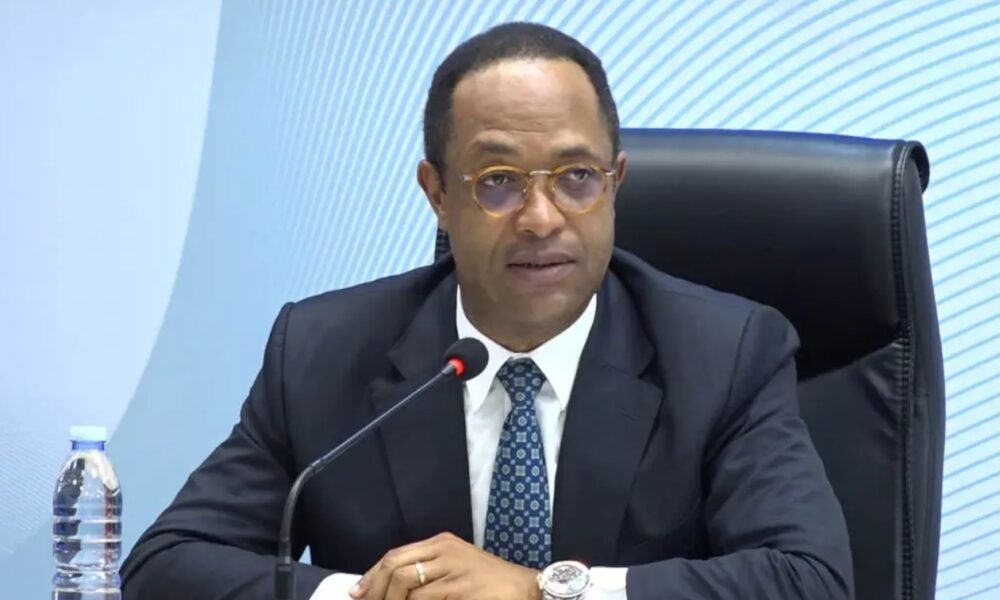
CHICAGO — An underlying statement was made when Big Ten commissioner Tony Petitti took the podium at the Hilton Chicago on Michigan Avenue.
Just a few feet to his left, the last three national championship trophies occupied center stage. They will accompany every Big Ten head coach taking the dais over the next three days.
“I think these three trophies are just the reflection of the commitment of our institutions to play great football,” Petitti said Tuesday morning.
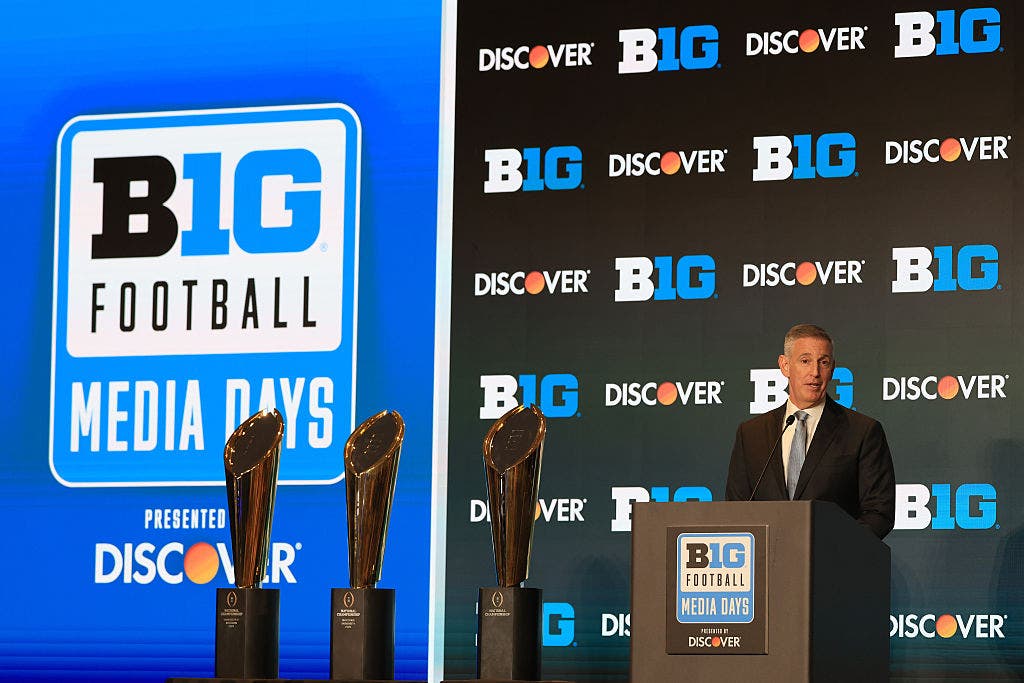
Big Ten commissioner Tony Pettiti shared the stage with the trophies from the last three national champions — Michigan, Ohio State and Indiana — at Big Ten Media Days on Tuesday. (Photo by Justin Casterline/Getty Images)
Throughout this week, from 8 a.m. to 5 p.m., these golden pieces of hardware will represent a greater symbol. The Big Ten Conference snatched these trophies and lorded them over the SEC — even if noted TV analyst Nick Saban believes otherwise.
“Whoever wins the national championship doesn’t define who has the best conference,” Saban said in an appearance on ESPN during SEC Media Days. “I think the best conference gets defined by how many good teams you have from top to bottom.”
Saban reminded us that five SEC teams got into the 12-team CFP (5), but failed to mention that no SEC team has played for a national title since 2022.
Passive aggressive or not, it’s clear that the Big Ten believes national titles correlate to conference hierarchy.
Last year, only three Big Ten teams qualified for the 12-team tourney, so, despite those three national titles, Petitti continued to push for a doubling of the CFP field and even dropped one of the big ideas he floated to form it.
“We were focused on automatic qualifiers,” Petitti said. “We’re not focused on that anymore.”
Removing automatic qualifiers certainly does open a potential 24-team CFP up and has the chance — if the selection committee invites the best 24 — for the best college football postseason possible. It would also allow the Big Ten to continue sidestepping an inconvenient truth: None of their three consecutive national title-winners played a Power 4 opponent in non-conference play.
Michigan, the 2023 national champ, played East Carolina, UNLV and Bowling Green out of conference. In 2024, Ohio State played Akron, Western Michigan and Marshall. Last season, Indiana played Old Dominion, Kennesaw State and Indiana State.
Does it matter that a few of those teams turned out to be good? That Old Dominion and Kennesaw State each won 10 games in 2025? Or that Marshall won 10 games in 2024? Or that UNLV won nine in 2023? Not to SEC coaches and fans, especially now that the SEC is moving to nine conference games after years of claiming their eight-conference game schedule is more difficult than anybody else’s nine-conference game schedule.
In 2026, the SEC expects the CFP selection committee to treat it with a little more respect because it’s not only playing another conference game but effectively adding another Power 4 opponent to each team’s schedule. For his part, Petitti isn’t interested in forcing his member programs to play at least one Power 4 non-conference opponent because his focus is the postseason.
“We’re looking at the committee picking the field of 24,” he said. “We feel that, ultimately, will still unlock the power of scheduling that we want.”
The Big Ten wants schedules to feature a marquee team like Ohio State playing a marquee SEC team like Texas — which will happen for the second season in a row — but during the month that matters most in the sport: December. To let Petitti tell it, SEC commissioner Greg Sankey has considered that, too.
“The first thing I’ll say about working with the SEC on the playoff, and working with Greg specifically, I’ve never heard him say that he won’t do the work and consider 24,” Petitti said. “I think he’s been public about certain preferences he has, but he’s committed himself to doing the work around all formats. And we’ve done the same thing. We have strong opinions about where the right path is. I think there’s been an evolution since we were here last year about how people feel about 24 at this point, and we’ve made adjustments in our league.”
Will SEC Join Big Ten in Support of 24-Team Playoff?
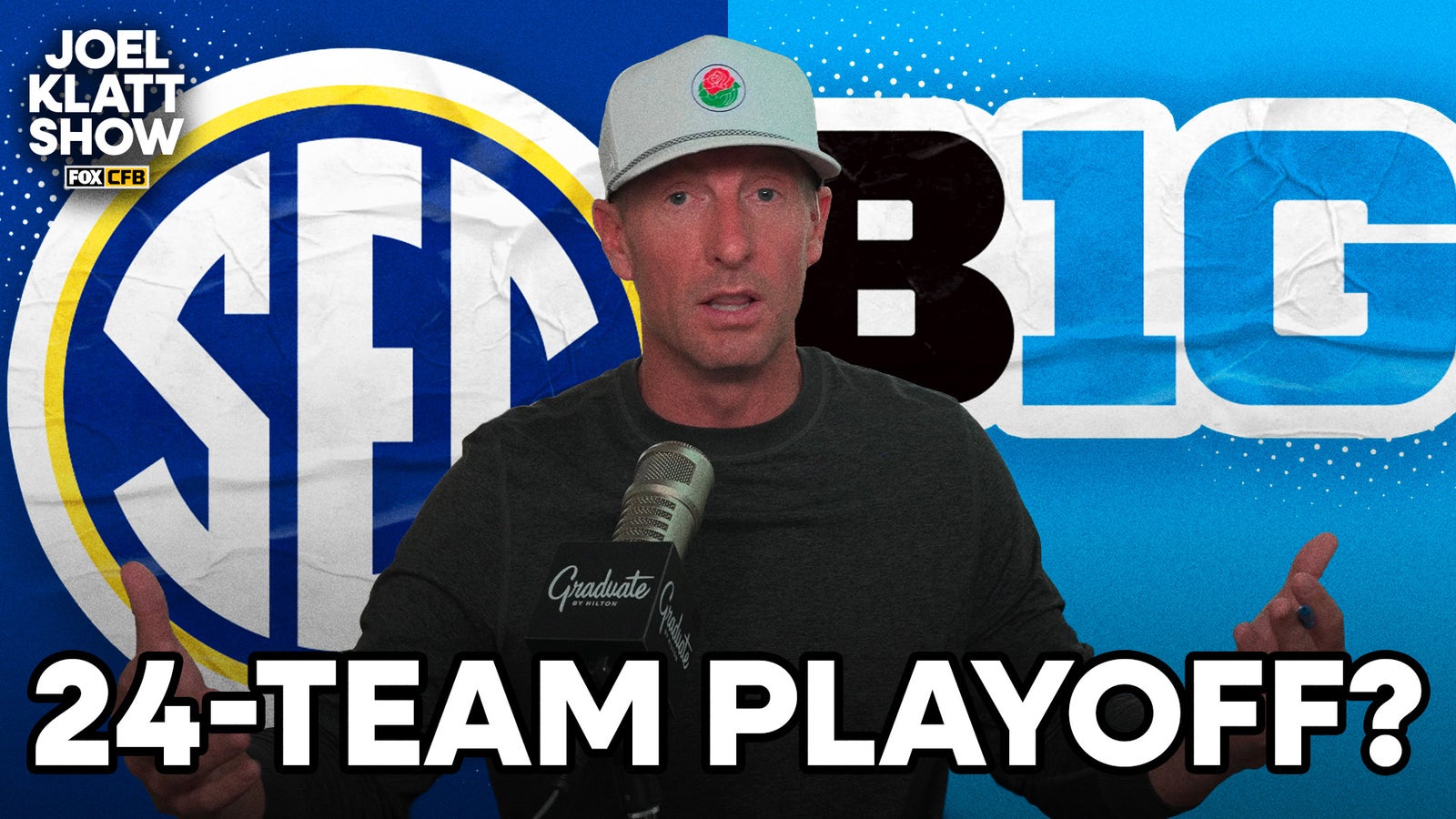
The conversation around expanding the CFP to 24 teams has changed from discussing the format itself to maximizing an extended playoff so that college football receives the appropriate prestige with a larger field of contenders vying for a national championship.
“The idea is keeping as many teams in contention for as long as possible,” Petitti said. “Play as many meaningful games for as long as you can. Secondly, the format creates all kinds of incentives. If you think about a 24-team playoff, right, a bunch of teams are going to be ranked between 16 and 24 that are just trying to make sure they’re in. You’re going to have teams playing until the very end to see if they’re in.”
It’s inescapable now: We care about the CFP. We care about who gets an invitation, and whine about who doesn’t. The loss of regional relevancy for the regular season is a rising pinnacle to postseason panache.