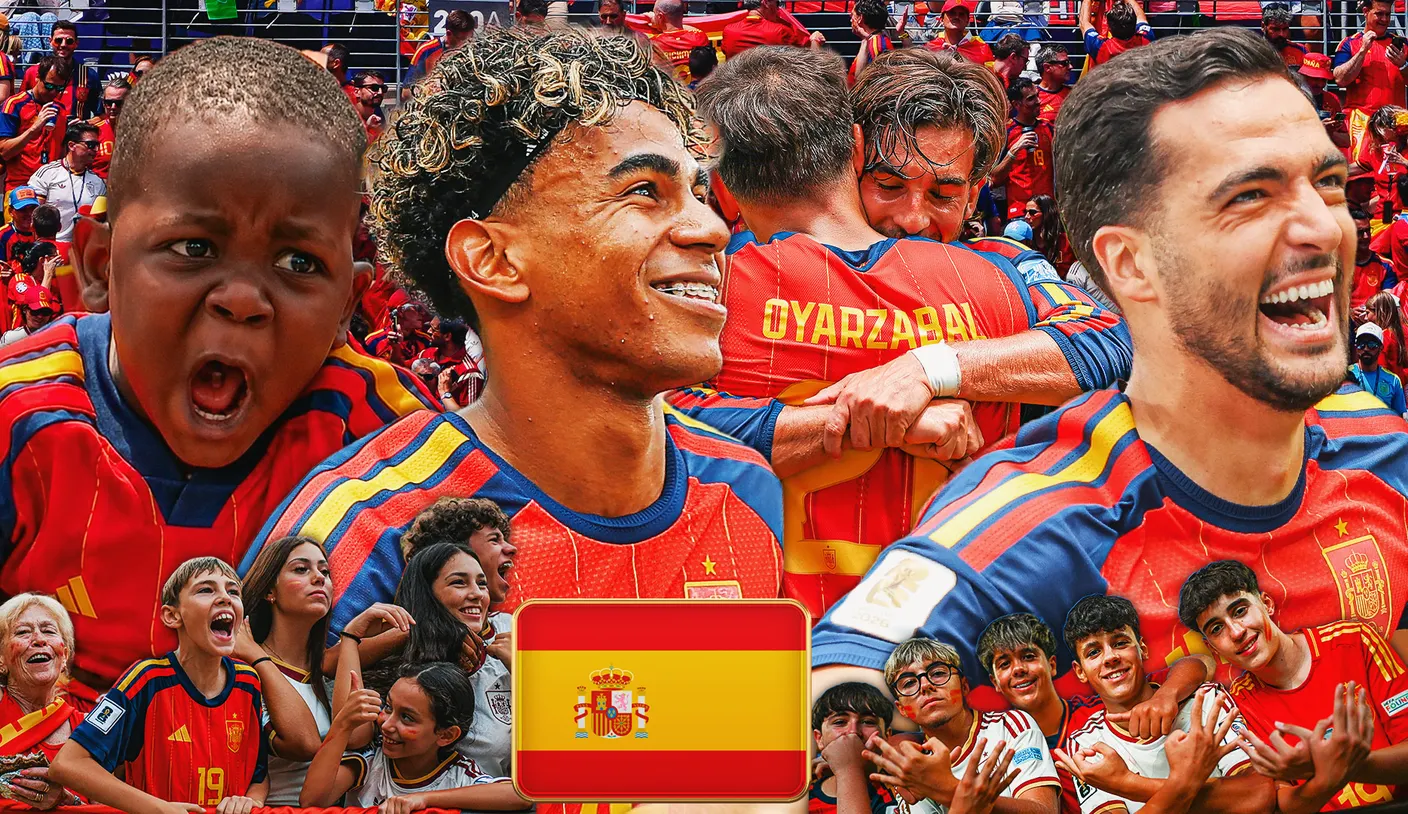
El Fútbol won on Sunday.
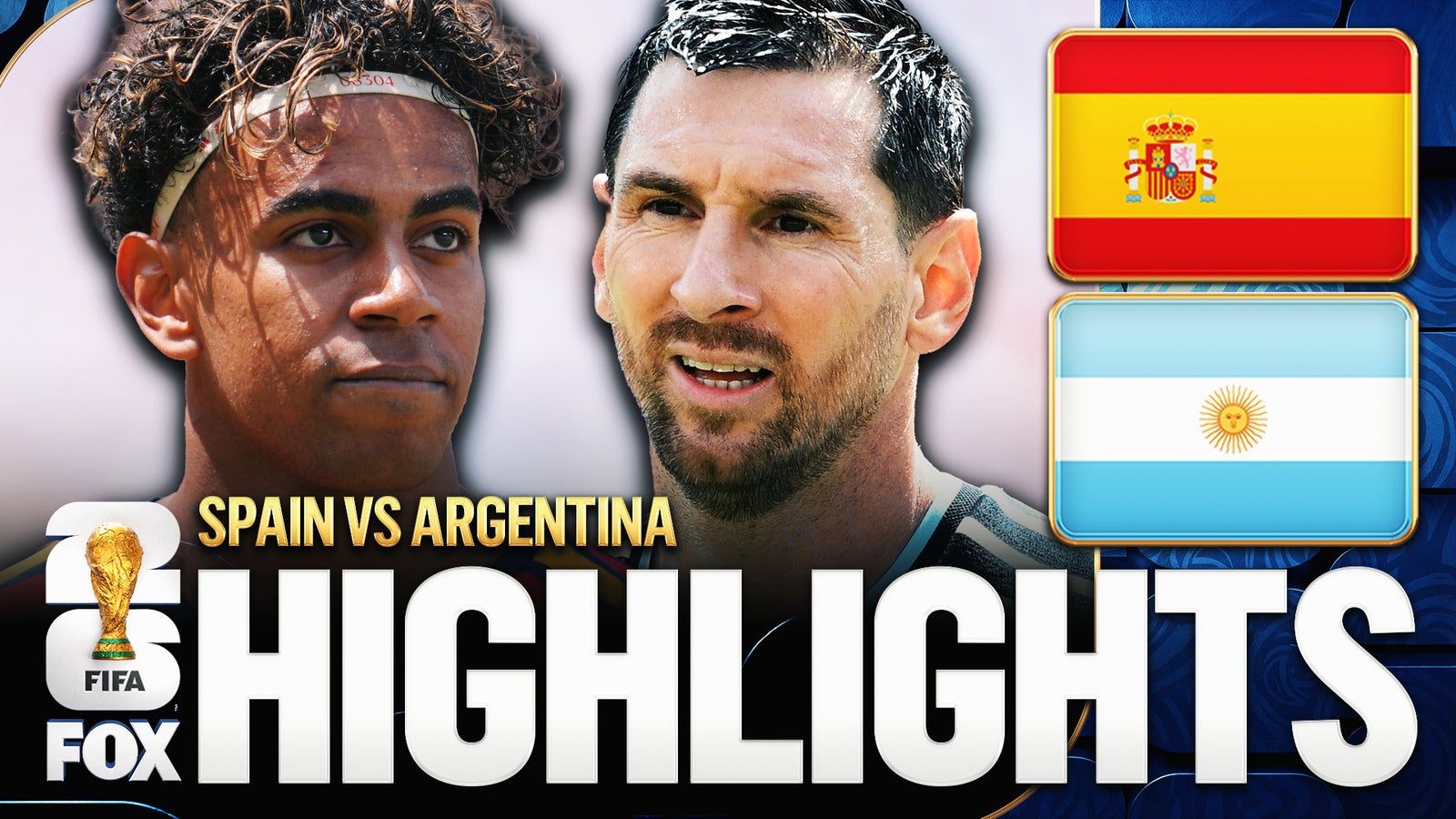
Spain beat Argentina, 1-0, in New Jersey to win its second World Cup, and the scoreline is the least descriptive stat of the night. Try this one instead: The defending champions, with Lionel Messi on the field for 120 minutes, did not register a single shot on goal. Not one.
Spain had 65 percent of the ball, took 20 shots, made Emiliano Martínez produce a World Cup final record 11 saves, and when Ferran Torres swept in Nico Williams’ header across the box in the 106th minute, it wasn’t a breakthrough. It was the inevitable finally coming to fruition.
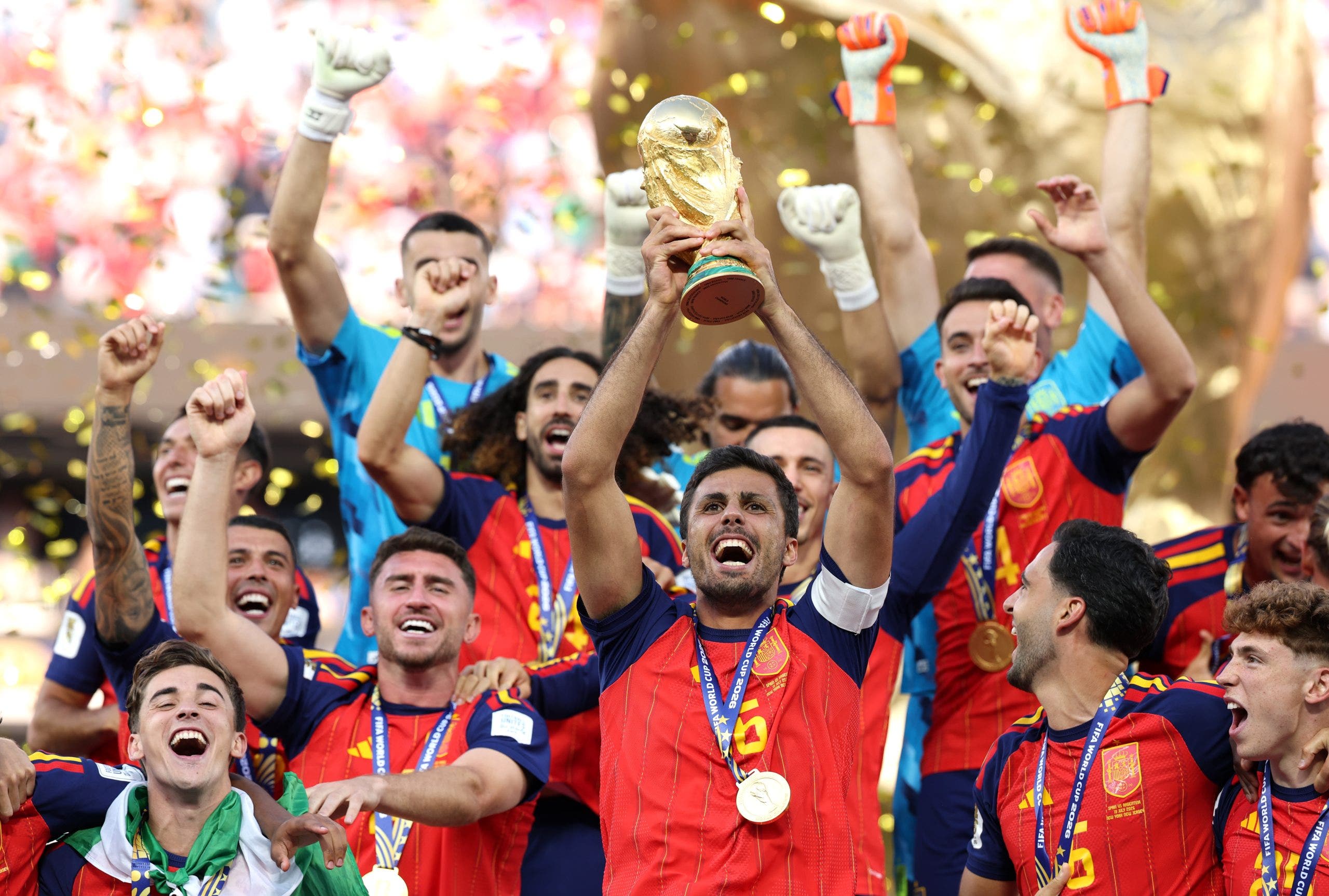
(Photo by Alex Pantling – FIFA/FIFA via Getty Images)
This was total domination disguised as a tight final if you only look at the score. Spain finished the tournament unbeaten, conceded one goal in eight matches and suffocated the best attacking players on earth — France, then Argentina — in consecutive games.
La Roja pass you to death, sure. But they also press you into panic the instant they lose the ball, and they defend with an organization that borders on choreography. This is a complete team. And more importantly, it is a completely legible team.
Which raises the question worth mulling over: Why is Spain the one nation you can identify instantly by its playing style?
Because we live in soccer’s most unified era. Globalization has sanded down national styles. Brazilian kids grow up in European academies. Every federation hires the same journeymen. Turn on a random international match, and you’ll see the same shape, the same buildup patterns, the same borrowed ideas.
This summer, we saw Brazil playing Italian catenaccio, while Japan brought the beauty. Imagine predicting that decades ago. National identity in this sport is mostly a nostalgia act now.
Except in Spain, where it’s a curriculum.
Walk into almost any Spanish academy, and you’ll find 8-year-olds playing rondos before they’re old enough to spell “tactics.” The keep-away circles look like warm-up games. They’re actually the entire national philosophy in miniature: receive on the half-turn, know your next pass before the ball arrives, make the field a geometry problem the opponent can’t solve.
Positional play isn’t taught in Spain as a system. It’s taught as a language, the way kids elsewhere learn multiplication tables. And the pressing is drilled just as young: The moment possession is lost, the nearest players swarm to win it back. The academy gospel says the ball is the whole point, and living without it is unacceptable.
Then the federation does the part almost nobody else does: Every Spanish youth national team, from the U-15s up, plays the same way. Same principles, same patterns, same demands. By the time players reach the senior side, they’ve been rehearsing this exact play for a decade.
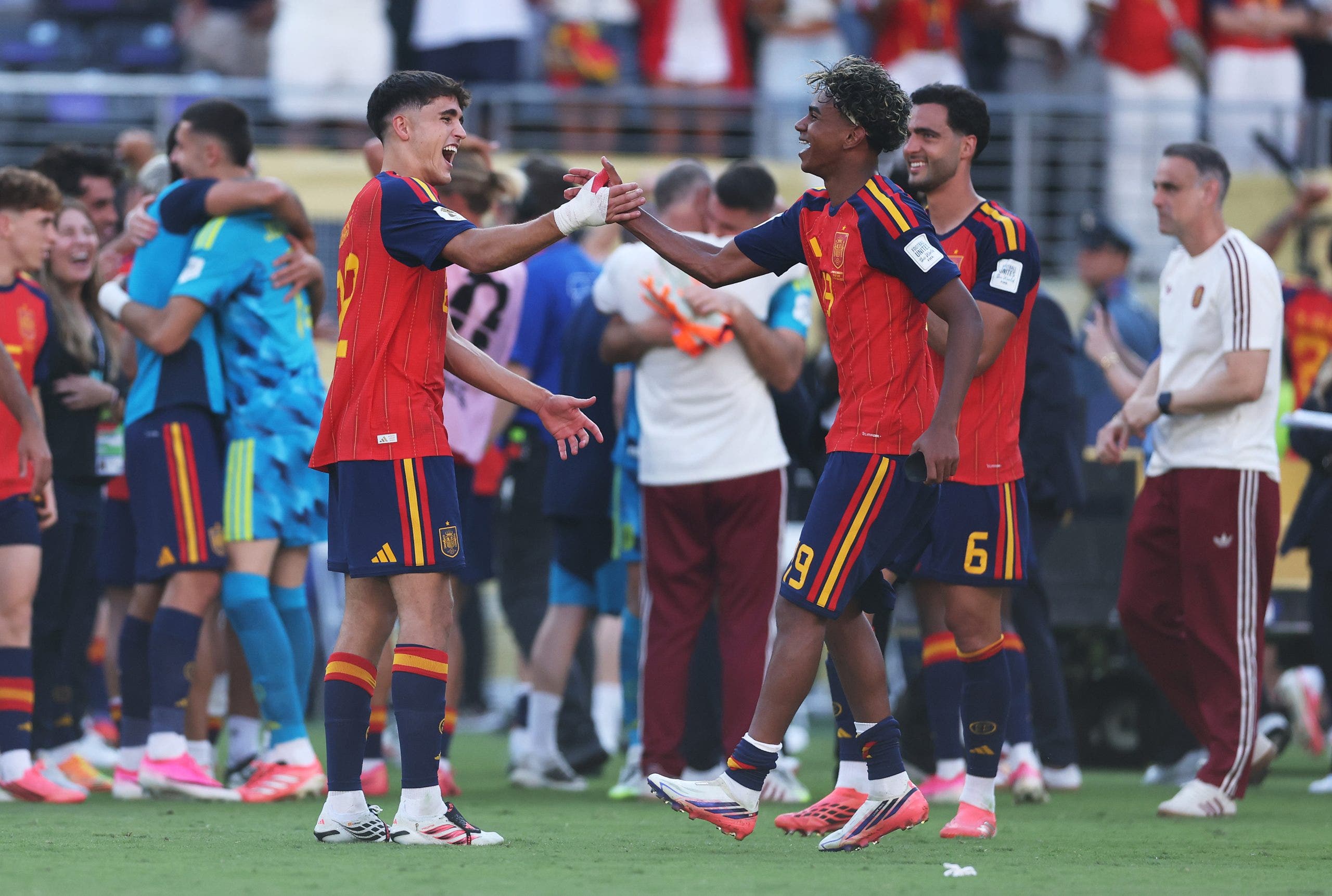
Pau Cubarsí and Lamine Yamal celebrate after Spain’s 1-0 win vs. Argentina in the 2026 World Cup final. (Photo by Maddie Meyer – FIFA/FIFA via Getty Images)
Pau Cubarsí and Lamine Yamal didn’t need to learn Spain’s style at 17. They were raised inside it.
The man lifting the trophy is the proof. Luis de la Fuente isn’t some outside hire with a vision. He spent years inside the federation coaching Spain’s U-19s and U-21s to European titles — coaching many of these exact players as teenagers. The pipeline didn’t just produce the squad. It produced the manager.
That’s why the ghosts of 2008 to 2012 don’t haunt this team; they were simply the foundation.
Xavi Hernández and Andrés Iniesta retired, but the idea never did. It just went back into the academies and waited for new bodies. Rodri conducts where Xavi conducted. Pedri, Dani Olmo and Fabián Ruiz are distinctly Spanish in the way they take care of the ball. The names change. The structure doesn’t.
Every other football power should be taking notes, and most won’t, because this can’t be copied in a hiring cycle. It’s a 30-year commitment to teaching children your identity and then trusting it at every level. Spain made that commitment decades ago and never flinched, through golden runs and early exits, alike.
Sunday brought the reward for their consistency: a World Cup won by a national team that knows exactly who it is, in an era when almost nobody else does.
La Roja play fútbol. Everyone else plays catch-up.
Spain vs Argentina Highlights 🌎🏆 2026 FIFA World Cup™ | Final