The dust has settled on the fact that St Helens have missed out on play-off rugby for the first time after their seventh-placed finish in Super League.
The analytical dissection of how this happened has been ongoing by fans and pundits for the best part of two years. Some supporters would say longer.
The next 12 months will give an indication of how long those with power inside the four walls of the club have realised that their trajectory has been downwards.
The famous question posed by meteorologist Edward Lorenz back in the 1970s was ‘can the flap of a butterfly’s wing in Brazil set off a tornado in Texas?’
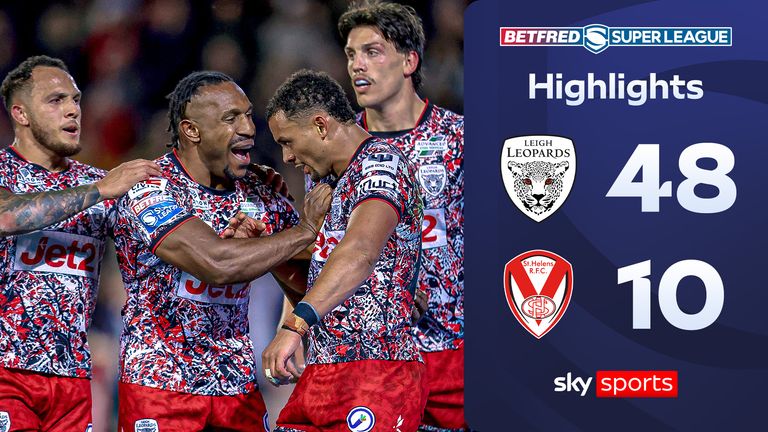
Leigh Leopards secured their Super League play-off place with a 48-10 victory over St Helens, who missed the play-offs for the first time in the club’s history
Can the smallest of changes lead to significant outcomes in the most complex of systems?
If this low ebb for Saints is their tornado, what exactly was the flap of the wing? What exactly caused the chaos?
For that, we need to rewind to 2019, when they picked up their first Super League title in five years.
2019: The start of a run like never before
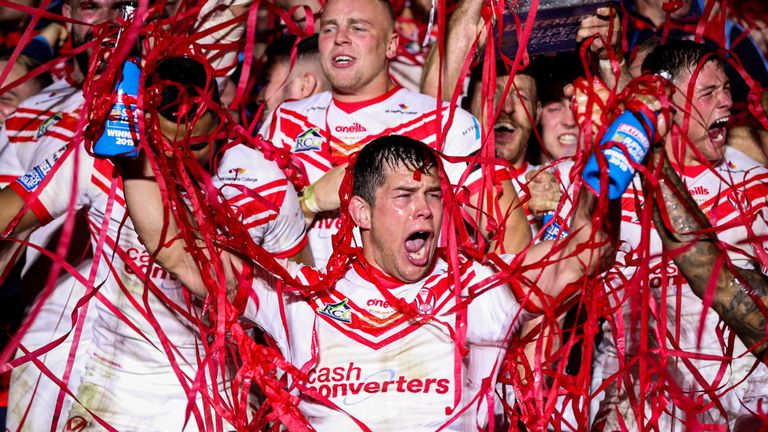
Highlights from the 2019 Super League Grand Final where St Helens beat Salford 23-6 at Old Trafford
Midway through 2018, St Helens were sitting mid-table and made the decision to part ways with head coach Keiron Cunningham and bring in Justin Holbrook.
After a Luke Gale drop goal saw Saints heartbreakingly fall in the semi-finals in 2018, 2019 marked the year when they were simply the best team around.
The Saints obliterated the competition in 2019, losing just three matches and cantering to the top of the league.
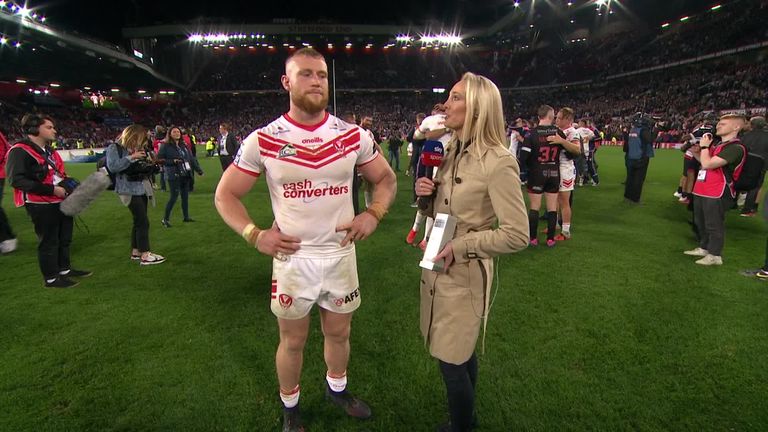
Luke Thompson was the first prop since 1992 to win the man-of-the-match award in the Super League Grand Final
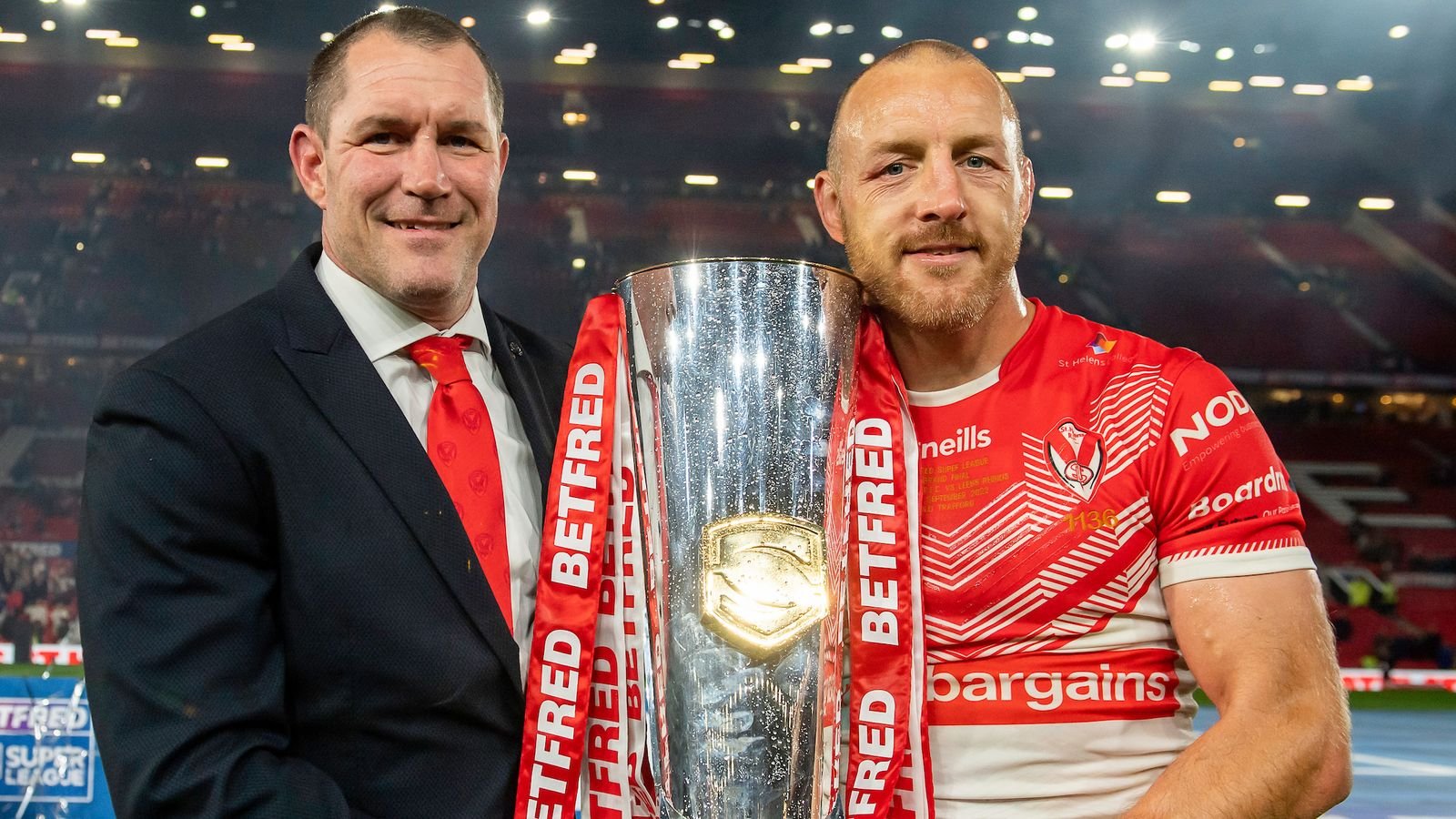
Their 23-6 win over Salford Red Devils in the Grand Final was the moment that cemented that St Helens were here once again.
It was a star-studded team with the likes of Jonny Lomax, Tommy Makinson, Alex Walmsley and Lachlan Coote all in their mid-to-late 20s and in their prime. A mix of homegrown talent and hand-picked Australian superstars was running the show.
They had to then overcome a change of head coach but, under Kristian Woolf, success would continue…
2020-2023: Four in a row leads to climbing Everest
Woolf has spoken openly about the fact that the season shutting down due to Covid potentially saved his job.
Woolf’s team had just lost to Huddersfield Giants and Castleford Tigers when the season went on hiatus.
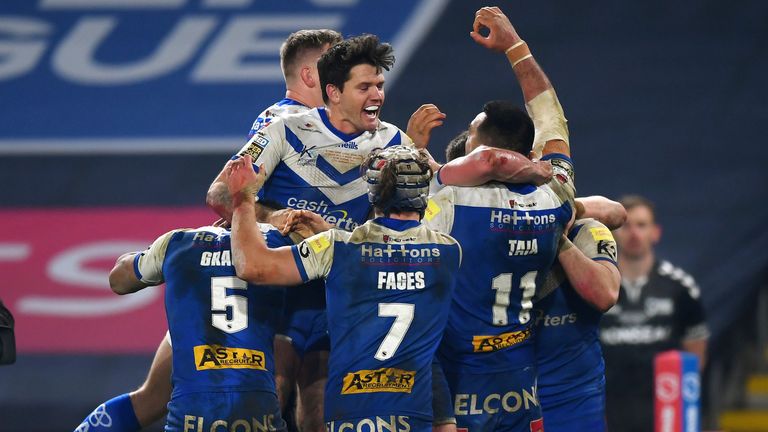
In the final moments of the game, Tommy Makinson hit the post when attempting a drop goal, only for Jack Welsby to follow up to grab a try
By the time it returned, he had spoken with his playing group about what more they wanted from him and how they wanted things to run. A collaboration between a stern coach and a group striving for success – and continuing to achieve it – was born.
Jack Welsby scored one of the best Grand Final tries ever seen in 2020 and then two more Super League wins followed. Not only that, they won a Challenge Cup and a League Leaders’ Shield.
Then they do the unthinkable…
World Club Challenge: Everest complete
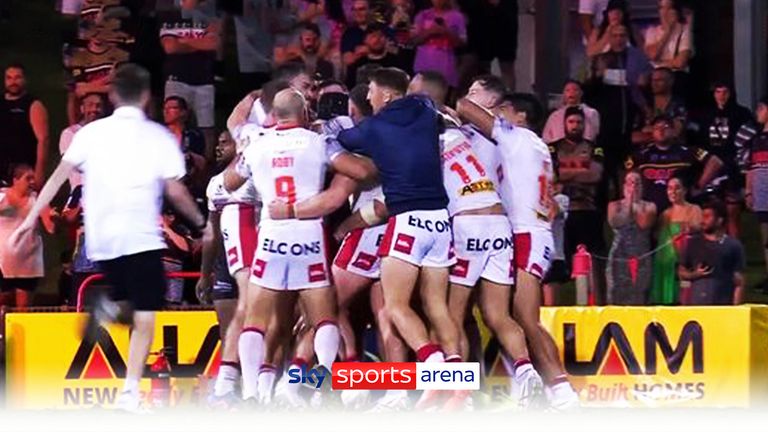
St Helens beat Penrith Panthers to win the World Club Challenge in dramatic fashion with an extra-time golden point winning drop goal!
When St Helens headed down under for the World Club Challenge in 2023, no one believed they could beat Penrith Panthers.
Hometown head coach Paul Wellens moved from captain and player to assistant coach, and after over 10 years in the coaching game at the club, he had stepped up to the top job.
Then, Lewis Dodd sent over a golden-point drop goal that is lauded as one of the most seismic moments in the sport in this country.
They had climbed to the top of Everest and planted the St Helens flag.
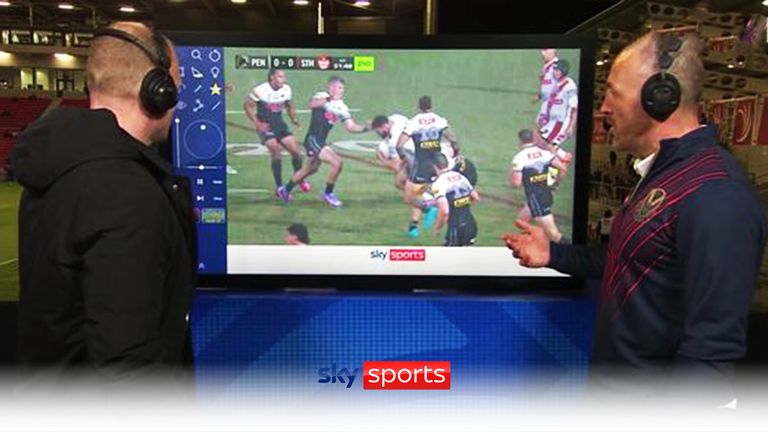
St Helens captain James Roby analyses the incredible try that helped them beat Penrith Panthers to win the World Club Challenge
You have won it all, your players have provided every success you have asked for.
So what is the next task? Is it starting a transition period? Is it trusting this same group of players to provide once again? Is it a mix of both?
St Helens went for option B…
Salary cap bites
Big players were winning big and getting their reward, deservedly so. But in a salary-capped sport, there comes a time where that may start to bite.
By this point, the likes of Makinson, Lomax, Walmsley, Mark Percival, Louis McCarthy-Scarsbrook and Sione Mata’utia had brought unprecedented success. They were also now mostly in their 30s.
Naturally, with that, comes upgraded contracts. Simply put – you win more you deserve to earn more.
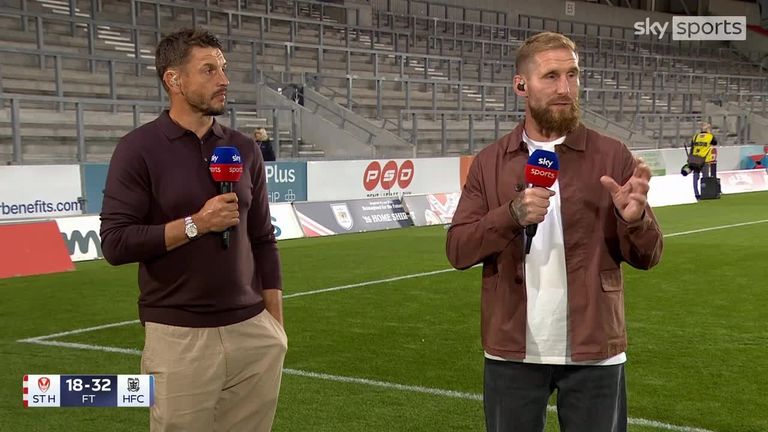
Jon Wilkin and Sam Tomkins were shocked by the way St Helens lost to Hull FC and looked at the massive decline of the club
But, if contracts are being upgraded year on year, the space on a salary cap dwindles. Your chance to bring in big names dwindles. Your room for youngsters to be earning well dwindles.
A sum of £2.1m only stretches so far and you need to be ruthlessly pragmatic. Or players need to be willing to earn less than what they were receiving in their 20s. A tough sell!
Over the next three seasons under Wellens, St Helens would make just 11 signings to replace the likes of Regan Grace, James Roby, Will Hopoate, Makinson, Lewis Dodd and Mata’utia.

St Helens lift their fourth Grand Final trophy in a row after a 24-12 victory over Leeds Rhinos
Those signings were Tee Ritson, Wesley Bruines, Daryl Clark, Waqa Blake, Kyle Feldt, Tristan Sailor, Lewis Murphy, Moses Mbye, Matt Whitley, Shane Wright and Deon Cross.
Wright and Cross only became available due to the financial collapse of Salford Red Devils.
Some would argue those big boots have still not been filled. Or if they have been filled, the successor has not matched up to their predecessor.
Moneyball gone wrong?
Back in 2025, former St Helens CEO Mike Rush described the club’s recruitment strategy as ‘Moneyball’.
Moneyball is a term coined from Michael Lewis’ book which analysed how, in 2002, Oakland Athletics and their general manager Billy Beane used a statistical approach that saw them sign players whose skills might be being undervalued on traditional methods of scouting.
You sign players to fulfil particular roles, for example making lots of tackles or making metres, knowing they lack in other areas, so that you can still compete despite being hampered by a budget.
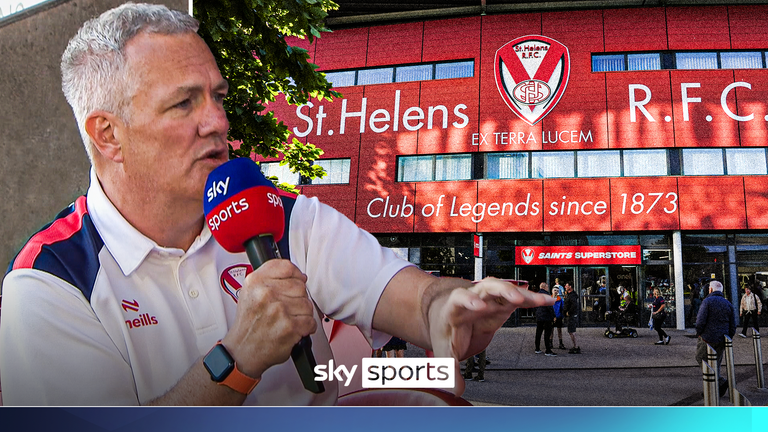
On The Bench podcast with Jenna Brooks and Jon Wilkin, St Helens CEO Mike Rush responds to recruitment criticisms around the club
“We’re always going to get stuff wrong because whether it’s an overseas player or not, you take risks and you gamble,” Rush told Sky Sports.
“Context is, and without divulging personal business, it’s a salary-cap sport. You’re putting certain numbers on players’ heads that you believe they’re worth.
“Without people knowing the salary-cap value, it’s very difficult. It’s where that person sits on our cap [that determines] if we get value.
“It’s much more detailed than just picking a certain player and saying, ‘is he playing well?’
“Waqa Blake played in an NRL Grand Final. That doesn’t make him a great player, but for what we had available in our cap or for what we valued the player at, it was worth a chance to do.”
So, you gamble and sign what you think is value for money. But did that mean St Helens built a cost-effective squad of players who did not deliver what was asked of them?
One thing that is for sure is that they did not replace like for like.
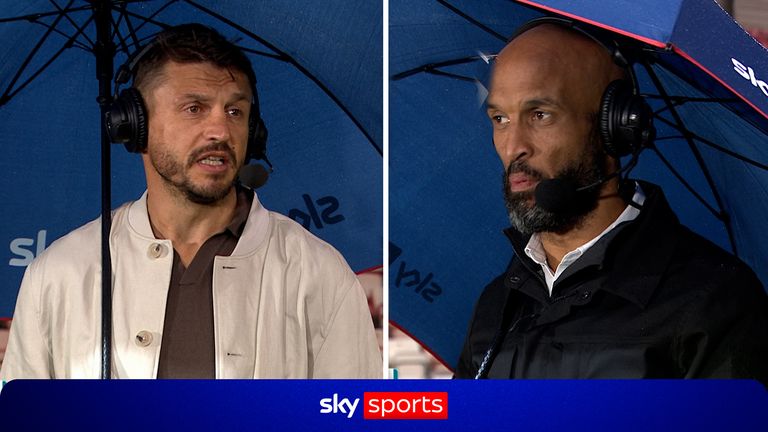
Jon Wilkin and Jamie Jones-Buchanan assess the problems facing St Helens after their 48-10 defeat at Leigh saw them miss the Super League play-offs for the first time in the club’s history, with recruitment and squad balance coming under scrutiny
“I’ve said it a number of times but Saints’ recruitment has been shocking,” Sky Sports’ Jon Wilkin said.
“It’s been terrible. They’ve made convenient and short-term recruitment choices. They’ve not replaced like for like and they need to rethink their recruitment strategy.
“There’s a lot of young guys who have gone out into Super League who aren’t ready. I’m loving that, it is great for them and for their future.
“But the reason they’re out there was because you had an old squad at the start of the year that wasn’t durable enough to get through a year, and then you signed shoddy replacements for guys who moved on.”
Not only that, St Helens are not the spending force they once were. It is not just the ‘Super League giants’ with cash to burn. Obviously, Wigan have got richer, but Wakefield now have money, as do York, Leigh and more.
More clubs are offering better and Saints are being outcompeted in the wage stakes.
Wellens to Rowley to Walters…
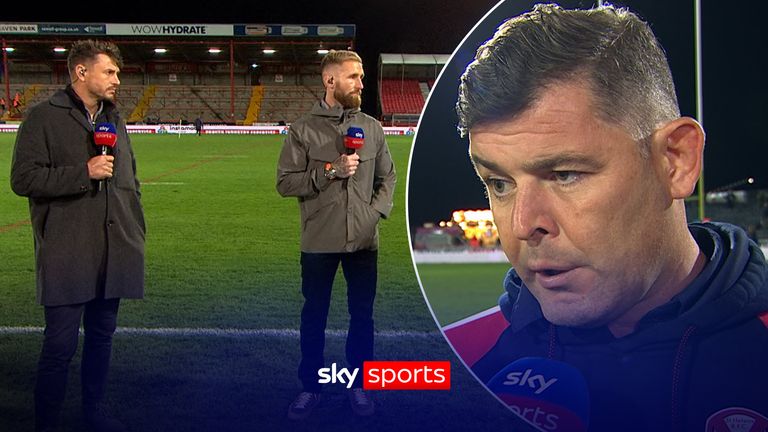
Jon Wilkin says St Helens were irresponsible to give Paul Wellens the top job at the club so early on in his coaching career
If quality drops, senior players age and suffer injuries, and more is asked of youngsters, then naturally, outcomes of seasons will change.
Lomax and Percival have managed just 14 games between them in 2026. They do not offer what they once did.
Wellens, Roby and Rush also all left the club in a quick span of time. That is three people who have had eyes on St Helens’ successes and failures, consistently since the 1990s.
They lost stalwart and skipper Matty Lees to injury early in the season and have not had him as the enforcer on the pitch. They also lost their other enforcer in Morgan Knowles to the NRL.
St Helens fans did not enjoy the attritional approach to rugby under Wellens that brought them third, sixth and fifth-placed finishes that saw them make the play-off semi-finals twice in those three seasons.
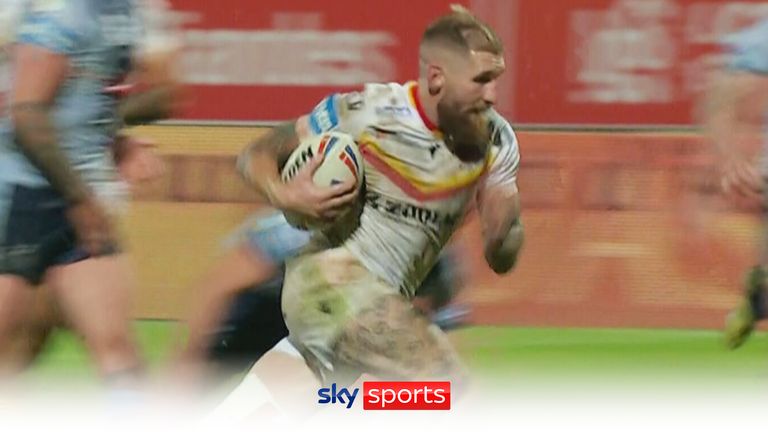
Sam Tomkins sends the Catalans Dragons to the Super League Grand Final with this last minute try!
The club decided that those results, with the roster available, were not good enough and change was needed. With that, they brought in Paul Rowley to turn the club’s fortunes around on a three-year deal.
Rowley lasted less than a season at Saints before being sacked ahead of the fixture against rivals Wigan Warriors in Round 20 back in July.
It is unknown how the season in full would have shaped under Rowley given the raft of injuries that St Helens faced and the clear signs that his systems were not embedding into a club that has a very specific DNA.
What we do know is they finished seventh.
Now they have turned to Australia head coach Kevin Walters to get things back on track.
St Helens legend James Graham said on his podcast, The Bye Round, that he had sent Walters a YouTube video of all of Saints’ greatest wins to show him just why they have the tagline ‘Never write off the Saints’.
Walters is renowned for maintaining strong environments and being an advocate for his players. He is already teasing big signings he is making.
The noises from St Helens are that they are now reverting to splashing the cash to ensure the quality on the field matches the expectations off it.
Chaos theory…
The question posed was what was St Helens’ ‘flap of a wing’. What where the small, incremental changes made that ended in this tornado.
Frankly, it seems that what caused their tornado in 2026 is that they spent four years not flapping their wings at all.
They say in sport, if you are not evolving, you are falling behind. Those at St Helens can say they could not see this outcome occurring.
But this is not a random outcome. It was predetermined when option B was chosen – the option of standing still and attempting to not cause disruption by flapping your wings.
The regular Super League season concludes with Round 27 from Thursday September 10 live on Sky Sports.